
Philippines Digital Nomad Visa
)
Andy Stofferis
Freelance Writer
Last update
)
Philippines Rating from Citizen Remote
Overall  3.8
3.8

Internet Infrastructure 2.0
Country Stability 4.0
Cost of Living 4.0
Ease of Obtaining Visa 4.0
Taxes 5.0
Quick Visa Facts

Visa length 1 year, renewable once

Possible to extend? Yes, once, for the same duration

Who can apply? Foreigners employed in a country other than the Philippines

Minimum Income Requirements No figure set by the DFA; proof of sufficient foreign income

Time for visa applications Not published by the DFA
Want to know if you can apply?
Complete a visa quiz and see if you qualify!
Philippines Digital Nomad Visa Overview
The Philippines digital nomad visa is real and it's live. President Marcos signed Executive Order No. 86 on 24 April 2025 and it's been in force since May 2025. If you work remotely for an employer or clients outside the Philippines, you can now apply to live there for up to a year, renew once, and come and go on multiple entries.
There's one catch you'll want to check before anything else: you have to be a national of a country that offers Filipinos a digital nomad visa in return, and that country needs a Philippine embassy or consulate. More on that below. If you don't qualify, the tourist route in the next section still works for shorter stays, and our list of every digital nomad visa has the alternatives.
Who Can Apply for a Tourist Visa for the Philippines

If You Are a United States Citizen
US citizens do not need to apply for a visa before visiting the Philippines and will be issued a 59 day visa on arrival. After this, they can apply to extend the visa for up to an additional six months.
If You Are an EU Citizen
Citizens of EU countries can arrive in the Philippines without a visa. You will be granted a 30-day visa on arrival and you can apply to extend the visa for up to another 59 days.
If You Are a US Green Card Holder
US green card holders can visit the Philippines without a visa if their country of nationality allows visa free entry. If not, you should apply for a visa. First submit your details online via the Philippine visa portal. You will be asked to provide information demonstrating that you are genuinely a tourist and show that you have a return or onward ticket booked.
As part of your online applications, you will need to choose your closest embassy or consulate, and you will need to make a follow up appointment to visit the embassy. You will be required to submit your passport and supporting documents at the embassy. If your visa is granted, you will be able to collect your passport and visa after 10 working days.
The fee for a standard 30-day tourist visa is US$30.
If You Are a Citizen of Canada, Australia, or New Zealand
Citizens of Australia, New Zealand, and Canada can arrive in the Philippines without a visa. You will be granted a 30-day visa on arrival and you can apply to extend the visa for up to another 59 days.
If You Reside in Any Other Country
A complete list of the 157 countries whose citizens can travel to the Philippines for a period of 30 days without first obtaining a visa can be found here.

Our Community Drives it all
Join the community of remoters!
What Executive Order 86 Actually Says
Plenty of sites will quote you an income figure, a fee and a processing time for this visa. The order itself contains none of those. Here's what it does say, so you know what's guaranteed and what's still up to the Department of Foreign Affairs (DFA).
You qualify if you:
are at least 18
can show proof of remote work using digital technology
can show proof of sufficient income earned outside the Philippines
can show proof of no criminal record
hold health insurance valid for the whole period of the visa
are a national of a country that offers digital nomad visas to Filipinos, and that country has a Philippine Foreign Service Post
don't pose a threat to the Philippines' internal or external security
aren't employed in the Philippines
How long it lasts: a maximum of one year, and holders "may renew their visas for the same duration", so two years in total if you still qualify. The order also allows multiple entry privileges during the visa's validity.
Working locally: off the table. Taking a job with a Philippine employer is both a disqualifier and a listed ground for revocation. Your money has to come from abroad.
Family: the order doesn't mention partners or children at all. Ask the Foreign Service Post handling your application before you plan around bringing anyone.
Philippine DNV Visa Requirements
The DFA leads implementation, with the Department of Justice, Department of Tourism, Bureau of Immigration and Bureau of Internal Revenue alongside. The order gave them 30 days to issue guidelines and 60 days to start a pilot. As of September 2026 we haven't found those guidelines published anywhere official, so the specifics below are what the order requires plus what applicants normally need to prove it.
Proof of Employment/Income
The order asks for "sufficient income which is generated outside the Philippines" and doesn't put a number on it. You'll see US$24,000 a year quoted around the web. We can't trace that to the DFA, so treat it as a rumour until it appears on an official page. Expect to show an employment contract or client agreements, recent bank statements and, if you're freelance, tax returns.
Full Health Insurance
Cover has to be valid for the full period of the visa, not just the flight over. Standard travel insurance usually isn't enough for a year-long stay. Our digital nomad insurance page compares plans built for exactly this.
Clean Criminal Record
A police clearance from your home country. Philippine posts usually want it apostilled or authenticated, so build that time into your plan.
The Reciprocity Rule
This is the requirement that will decide most applications. Your country has to offer Filipinos a comparable visa, and the Philippines has to have an embassy or consulate there. The government hasn't published a list of qualifying countries. Two quick checks: does your country have a digital nomad visa at all (our visa library is a good place to start), and is there a Philippine Foreign Service Post in it?
How to Apply for the Digital Nomad Visa for the Philippines
The DFA issues the visa and the Bureau of Immigration handles security checks. Applications go through Philippine Foreign Service Posts, and the DFA runs an online e-Visa portal at evisa.gov.ph. When we checked, the portal's public pages didn't list the digital nomad visa as a category, so your first move is to contact the Philippine embassy or consulate for your country and ask how they're taking DNV applications right now.
Have your passport, proof of remote work, income evidence, insurance policy and police clearance ready before you get in touch. Posts differ on formats and translations, so ask rather than assume.
Timeline and Cost
Neither has been published by the DFA. Third-party guides quote anything from three to twelve weeks and fees from a few hundred pesos to a few hundred dollars, which mostly tells you they're guessing. Ask the post, and budget for the apostille and translation costs on your own documents either way.
Taxes for the Digital Nomad Visa for the Philippines
Executive Order 86 says nothing about tax, so any page promising a tax exemption is reading something into it that isn't there. What is true is the general rule: the Philippines taxes non-resident foreigners only on income earned inside the country. Remote income from a foreign employer or clients sits outside that under the standard rules. The Bureau of Internal Revenue is one of the implementing agencies, so guidance may follow. Get advice for your own situation, especially if you're staying close to the full two years.
Weighing it against the region? Thailand's DTV is the closest comparison and has a published fee and income bar, which the Philippines doesn't yet.
Living in the Philippines for Digital Nomads
The Philippines is an inviting destination with more than 7,000 tropical islands boasting large and bustling cities, white sandy beaches, and thick green jungles. The country boasts a friendly culture in which English is widely spoken and a highly affordable cost of living.

Capital Manila

Form of Government Republic
Population 113.9 million

Climate Humid Equatorial

Language Filipino and English

Currency Philippine Peso PHP US$1 = 55 PHP
14 people in Philippines!
Join the community of remoters!
As a digital nomad in the Philippines you can expect to land in a bustling, densely populated city with decent internet, excellent cultural attractions, nightlife, and food, and terrible traffic! These cities make a great base for those looking for reliable internet and coworking facilities.
As you hop away from the cities, you can find tropical beach paradises where high end resorts and fishing villages sit side-by-side and jungle forests that feel remote and undiscovered. Here Wi-Fi and work facilities are less reliable, but if you plan your travel well, you can touch base in more developed areas periodically to recharge.
The Philippines is a fast developing country and you will encounter many local and regional entrepreneurs on your travels that can act as a source of inspiration and opportunity.
Attractions and Best Places to Visit
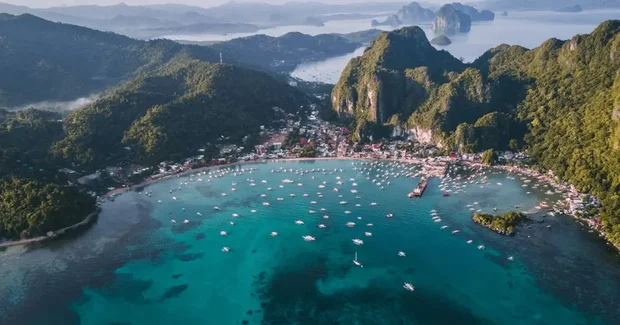
There are many stunning natural wonders and cultural sites around the country, but these are the best places for digital nomads Philippines to visit.
Batanes, Luzon
Located in the far north of the Philippines, Batanes is a group of 10 small islands with lush green vegetation and an old-world vibe. It is often described as a tropical New Zealand with Lord of the Rings vibes. Visit attractions such as Basco Lighthouse, Morong Beach, and the Vayang Rolling Hills.
Coron, Palawan
Coron are a group of incredible rock-formed islands that jut out of crystal blue waters to create a striking landscape. It is home to fascinating sea life and is well-known for its diving, including historical WWII shipwrecks. As well as swimming in calm blue waters, watch the sunset over My Tapyas and visit Calauit Wildlife Sanctuary.
Vigan, Ilocos Sur
The town of Vigan is a UNESCO World Heritage Site thanks to its mix of Spanish colonial and Asian architecture. Visits the Calle Crisologo, Syquia Mansion, Ilocos Sur Dancing Fountain, and Baluarte Zoo. It is listed among the New Seven Wonders Cities.
Boracay, Aklan
This is maybe the best spot in the Philippines for white sandy beaches and resort-style accommodation and activities. Snorkeling and diving in the area is accessible and rewarding, and the nightlife is notoriously good!
Lake Sebu, Mindanao
Lake Sebu is listed as a cultural landscape by UNESCO. The gorgeous lake and surrounding region is inhabited by the T’bolis, so it is also called the Land of the Dream Weavers because of the T’nalak tapestry central to their culture. The lake is surrounded by excellent hikes that will take you to seven stunning waterfalls.
Digital Nomad Hotspots
Digital nomads in the Philippines will surely want to travel around the country’s more than 7,000 islands, but these cities are the best places for digital nomads in the Philippines to base themselves.
)
Manila
City in Philippines
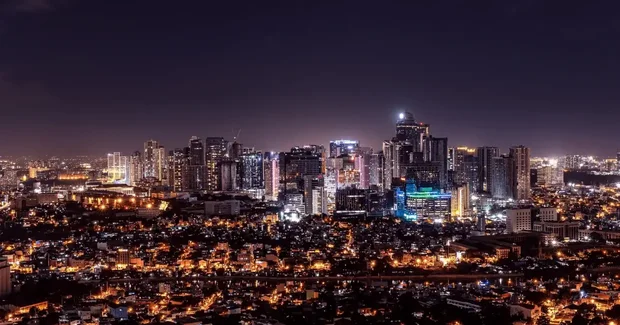
Manila is a big city and it comes with the noise, congestion, and pollution that you would expect. While learning to navigate the city can be a challenge, when you do you will find the best shopping malls, entertainment centers, and cultural corners. There is also a big and young ex-pat community working alongside local entrepreneurs.
You will find the best amenities of all sorts in Manila, everything from internet cafes to yoga studios. It is also well connected for exploring the rest of the country and surrounding region. There is a big Manila digital nomad community and there are some good coworking spaces including Acceler8, Clock In, Bull-ish, and Work Folk.
)
Cebu
City in Philippines
Cebu was originally the capital of the Philippines and a colonial port, so it has an old-world Spanish vibe. This is another popular destination for the expat community because it has fast internet, good amenities, and easy access to nearby tropical beaches, though they aren’t on your doorstep. Top nearby attractions include Kawasan Falls, the Visayan islands, and the Chocolate Hills of Bohol.
Many young professionals call the city home resulting in a thriving Cebu digital nomad community. There are good amenities for startups and entrepreneurs. Among the best digital nomad Cebu coworking spaces are Nomads Hub, ASPACE Crossroads, and The Company.
)
Davao
City in Philippines
If you are looking for a more local experience, then the friendly city of Davao is a great choice as there are few expats and mostly Filipinos. It is more affordable than many of the more popular tourist spots as well, but you can still expect decent internet and to be able to get access to everything you need.
Good coworking spaces in Davao include DevHub Davao, RainMakers, which costs just US$3 a day, and Dreamwork Cafe.
)
Siargao
Island in the Philippines
As a Siargao digital nomad you will be joining a big community of international surfers thanks to large and perfect waves. Split your time between internet cafes and gorgeous white sandy beaches, and spend the weekends snorkeling and island hopping.
The digital nomad Siargao community is slowly growing, but coworking spaces are relatively new to the island. Try the Lexias Hostel and Sunflower House Siargao, both of which offer both coworking and coliving facilities.
Benefits of Working in the Philippines as a Digital Nomad
Affordable Cost of Living
Like many other Southeast Asian countries, the Philippines offers an affordable cost of living for most digital nomads. One thing that stands out is that accommodation is surprisingly cheap and it is not difficult to find local rentals as a foreigner.
Tropical Without Tourists
The Philippines matches countries like Thailand for the quality of its beaches, but it does not have as many tourists so it feels less commercial and it is easier to find affordable accommodation and an authentic place to eat.
English Is Widely Spoken
English, alongside Filipino, is one of the official languages of the country and it is widely spoken. You will have no problem communicating what you want and finding new friends among the welcoming local community.
There are also several challenges for digital nomads wanting to live in the Philippines that you should be aware of.
Cities are crowded, resulting in lots of traffic and pollution
Internet connection can be poor outside of the major cities.
Crime rates can be high and threats of terrorism are high.
Overall the pros outweigh the cons of heading to the Philippines, but travelers should arrive prepared.
Cost of Living
The cost of living in the Philippines is highly affordable by international standards, though it can vary depending on where you are in the country. It is estimated that you might need about US$500 per month to live comfortably in the Philippines before rent.
This would include expenses such as:
US$3.50 for a lunchtime meal
US$10-US$15 for a single meal in a nice restaurant
US$1.50 for a beer
USS100-US$150 per month on groceries
US$100 per month for bill (electricity is expensive)
US$40 per month for a decent internet connection
The cost of accommodation is also relatively low in the Philippines and locals are often happy to rent to foreigners on a monthly basis. Expect to pay:
| City | One Bedroom | Three Bedrooms |
|---|---|---|
| The Philippines (in general) | US$325 | US$720 |
| Manila | US$575 | US$1,500 |
| Cebu | US$465 | US$465 |
| Davao | US$260 | US$650 |
Digital Nomad Essentials

Internet (speed) av. download 88 Mbps

Time Zone GMT+8

Socket Type A, B, and C, 220V and 60 Hz
SIM Providers: Smart, Globe, Dito Telecommunity, Cherry Prepaid. GOMO, TNT, or get an eSIM in the Citizen Remote app
Rather than going through the hassle of trying to get a local SIM in the local language with significant ID requirements, why not purchase an eSim in the Citizen Remote all-in-one app.
We have a huge range of regional and global provider options that cover all countries, including the Philippines. Just download the eSIM via Wi-Fi within the application and you have instant cellular data while traveling in the Philippines. eSIMs are ideal if you travel a lot as there are no contracts and you can manage all your SIMs in one place.
New Opportunities for Digital Nomads in the Philippines
The imminent launch of a new Philippines nomad visa offers an exciting new opportunity for remote workers. While Philippine tourist visas are already generous, remote workers will soon be able to stay in the Philippines for up to two years. The country’s warm culture, gorgeous nature, and affordable cost of living are beckoning.
FAQs About the Philippines Digital Nomad Visa
Is the Philippines digital nomad visa actually available?
Yes. It was created by Executive Order 86, signed 24 April 2025 and in force from May 2025. The DFA issues it.
How long can I stay?
Up to one year, renewable once for the same duration. Multiple entry is allowed while the visa is valid.
Is there a minimum income?
The order requires "sufficient income" from outside the Philippines but sets no figure. The US$24,000 you'll see quoted elsewhere isn't from an official source.
Can I work for a Philippine company on it?
No. Local employment disqualifies you and is grounds for revocation.
Can I bring my partner or kids?
The order doesn't cover dependents. Ask the Philippine post handling your application.
Who is eligible?
Nationals of countries that offer Filipinos a digital nomad visa and host a Philippine embassy or consulate. No official list has been published yet.
Does the Philippines Have a Digital Nomad Visa?
The Philippines announced in May 2023 its intention to launch a digital nomad visa. It is expected to be open for applications by early 2024.
What Is the Length of the Philippines Digital Nomad Visa?
The Philippine digital nomad visa will allow qualified remote workers to stay in the country for 12 months in the first instance, and will be extendable for another 12 months.
Is It Possible to Extend the Philippines Digital Nomad Visa?
Yes, the Philippine government has already announced that their planned 12-month digital nomad visa will be extendable for an additional 12 months.
Will You Get a Refund If the Visa Application Is Denied?
Visa application fees are rarely refundable as these funds are used to cover the cost of assessing and processing the visa. It is not anticipated that the application fee for the Philippine digital nomad visa will be refundable if the application is denied.
How Much Money Do You Need per Month in the Philippines?
While the Philippine government has not yet announced the minimum income requirement for the digital nomad visa, it is anticipated to be around US$2,000 per month. Based on cost of living, it is estimated that a single person needs around US$500 per month in living expenses plus US$300-US$600 for rent.
Is There a Digital Nomad Community in the Philippines?
While the digital nomad community in the Philippines is not as large as in neighboring countries such as Thailand and Singapore, there is a growing community of digital nomads and a long established community of expats, especially from the United States. The Philippines also has a strong startup and entrepreneurial culture among the local population.
What Countries Neighboring the Philippines Issue Digital Nomad Visas?
The neighboring countries of Malaysia and Thailand also offer digital nomad visas. The Malaysian visa allows you to stay for up to 12 months and has a minimum income requirement of US$24,000. That Thailand visa can be renewable for up to 10 years but has a higher income threshold starting at US$40,000 for individuals with a relevant Masters degree and US$80,000 for other remote workers.
Author
Andy Stofferis is a digital nomad blogger: www.andysto.com
He is a contributing writer for various organizations and media involved in the digital nomad industry (AllWork.Space, e-Residency Estonia).
Andy has been running a fully remote digital marketing agency over the past nine years while traveling to more than 50 destinations.


