
Malta Golden Visa (Permanent Residence Programme)
)
Nadia Dardón
Immigration Content Writer
Last update
)

Malta Rating from Citizen Remote
Overall  4.0
4.0

Internet Infrastructure 5.0
Country Stability 5.0
Cost of Living 3.0
Ease of Obtaining Visa 3.0
Taxes 4.0
Quick Visa Facts

Visa length Permanent residence (5-year residence card)

Possible to extend? Yes, renewable indefinitely

Who can apply? Non-EU/EEA/Swiss nationals meeting program requirements

Minimum Income Requirements Around €500,000 in assets (€150,000 in financial assets)

Time for visa applications Approximately 3–6 months
Want to know if you can apply?
Complete a visa quiz and see if you qualify!
Malta has long been known for its crystal-clear waters, rich history, and strategic location in the heart of the Mediterranean, but in recent years, it has also become one of Europe’s most attractive destinations for investors seeking residency through investment.
The Malta Golden Visa, officially known as Malta’s residency-by-investment program, offers non-EU nationals the opportunity to obtain long-term residency in a stable, EU-member country with strong economic fundamentals and a favorable lifestyle. From visa-free travel within the Schengen Area to the option to include family members, the program is designed for individuals looking for both flexibility and security.
In this guide, we break down everything you need to know about the Malta Golden Visa, including eligibility requirements, investment options, application steps, and key benefits. Whether you’re exploring Malta as a base in Europe or evaluating long-term residency options, this article will give you a clear, accurate, and up-to-date overview of the program.

Malta Golden Visa Overview
The Malta Golden Visa is a residency-by-investment program that allows non-EU nationals to obtain permanent residence in Malta through a qualifying investment. Officially known as the Malta Permanent Residence Programme (MPRP), the scheme came into effect in 2021 and is administered by the Residency Malta Agency, a government entity.
The program was designed to attract reputable foreign investors and families who want long-term stability in the European Union without the obligation to relocate full-time. Successful applicants are granted permanent resident status in Malta, along with access to the Schengen Area and the right to live indefinitely in the country.
Unlike some residency programs, the Malta Golden Visa does not require applicants to reside in Malta for a minimum number of days per year, making it particularly attractive for globally mobile individuals, international families, and business owners.
Who Is It For?
The Malta Golden Visa is intended for non-EU, non-EEA, and non-Swiss nationals who:
Have a clean criminal record and meet due diligence standards.
Can make a qualifying investment under the program.
Want long-term EU residency without mandatory relocation.
Wish to include family members such as a spouse, children, and dependent parents.
It is especially suitable for investors, entrepreneurs, remote workers, and families seeking a secure European base with lifestyle and mobility benefits.
What Does It Allow You to Do?
Holding Malta permanent residence under the Golden Visa allows you to:
Live in Malta indefinitely as a permanent resident.
Travel visa-free within the Schengen Area for up to 90 days in any 180-day period.
Include eligible family members under one application.
Maintain residency without minimum stay requirements.
Establish a legal base in an EU country with a strong regulatory framework.
While the Malta Golden Visa grants permanent residence, it does not automatically confer Maltese citizenship, though it can form part of a longer-term relocation or residency strategy.
Malta Golden Visa Requirements
To apply for the Malta Golden Visa (Malta Permanent Residence Programme), applicants must submit a set of standard documents along with proof that they meet specific financial, legal, and insurance requirements. All documents must be complete, accurate, and compliant with the guidelines set by the Residency Malta Agency.
Applicants are generally required to submit the following documents as part of their application:
Completed official application forms
A valid passport (covering the main applicant and all dependents)
Recent passport-sized photographs
Birth certificates
Marriage certificate (if applicable)
Proof of residential address
Police conduct certificates from the country of origin and any country of residence
Medical declaration forms
Due diligence and background check forms
Additional documents may be requested depending on the applicant’s personal circumstances and family composition.
Proof of Financial Self-Sufficiency
Applicants must demonstrate that they are financially self-sufficient and capable of supporting themselves and any dependents without relying on Malta’s public welfare system. This requirement is assessed through documentation such as bank statements, proof of income, asset declarations, and evidence showing the lawful source of funds.
As a general guideline, applicants are expected to demonstrate capital assets of at least €500,000, with a minimum of €150,000 in financial assets, although higher amounts may strengthen the application and are commonly expected for families.
Qualifying Investment Requirements
To qualify for the Malta Golden Visa under the Malta Permanent Residence Programme, applicants must meet the program’s mandatory investment criteria. This includes a qualifying real estate commitment in Malta, either through the purchase of a property valued at a minimum of €300,000 (or €350,000 in designated areas) or a long-term rental with a minimum annual rent of €10,000 (or €12,000 in designated areas).
In addition to the property requirement, applicants must make a non-refundable government contribution of €28,000 if purchasing property or €58,000 if renting, as well as a €2,000 donation to a registered Maltese non-governmental organization.
All investments must meet the minimum thresholds established by Maltese authorities and must be maintained for at least five years in order to retain permanent resident status under the program.
Private Health Insurance
Applicants are required to hold comprehensive private health insurance covering the main applicant and all dependents. The policy must be valid in Malta and provide coverage for medical treatment and health risks typically covered for Maltese nationals.
This insurance must remain in force throughout the duration of the applicant’s residence in Malta and may be reviewed during renewal or compliance checks.
Clean Criminal Record & Due Diligence
All applicants and adult dependents must have a clean criminal record and successfully pass Malta’s rigorous due diligence process. This includes background checks conducted by the Maltese authorities to ensure applicants do not pose a risk to public security, public health, or national interest.
Failure to meet the program’s due diligence standards will result in the refusal of the application, regardless of whether other requirements are met.
How to Apply for the Malta Golden Visa – Step-by-Step Instructions
Applying for the Malta Golden Visa under the Malta Permanent Residence Programme (MPRP) is a structured process that involves eligibility checks, document preparation, and government due diligence. Applications must be submitted through a licensed agent registered with the Residency Malta Agency, as direct applications are not permitted.
Step 1: Confirm Eligibility and Choose an Approved Agent
Before starting the application, applicants must confirm that they meet the program’s eligibility criteria, including financial capacity, investment readiness, and due diligence standards. At this stage, applicants are required to appoint a licensed Malta Permanent Residence Programme agent, who will act as the official intermediary with the Maltese authorities.
The agent will also conduct an initial assessment to identify potential issues before formal submission.
Step 2: Gather Required Documents
Once eligibility is confirmed, applicants must collect all required documentation for themselves and any dependents included in the application. This typically includes identity documents, civil status records, proof of financial assets, police conduct certificates, and health insurance documentation.
All documents must meet Malta’s formal requirements and may need to be legalized or apostilled, depending on the country of origin.
Step 3: Make the Initial Government Payments
Before submission, applicants are required to pay the applicable administrative and due diligence fees. These non-refundable fees cover background checks and the formal review of the application by the Residency Malta Agency.
Proof of payment must be included in the application file.
Step 4: Submit the Application to the Residency Malta Agency
The licensed agent submits the completed application package to the Residency Malta Agency on behalf of the applicant. Once submitted, the authorities conduct a thorough review of the documentation and initiate the due diligence process.
During this stage, applicants may be asked to provide additional information or clarifications.
Step 5: Undergo Due Diligence and Background Checks
Malta applies a multi-layered due diligence process to all applicants and adult dependents. This includes criminal background checks, source-of-funds verification, and security screening.
Processing times can vary depending on case complexity, but applications are typically reviewed within several months.
Step 6: Receive Approval in Principle
If the application is successful, the applicant receives an Approval in Principle. This confirms that the applicant has passed due diligence and may proceed with completing the required investments.
At this stage, applicants are given a specific timeframe to fulfill the remaining program obligations.
Step 7: Complete the Investment Requirements
Following approval, applicants must complete the qualifying investments, including the real estate commitment, government contribution, and philanthropic donation, in line with program rules.
Proof that these obligations have been fulfilled must be submitted to the authorities within the specified deadline.
Step 8: Obtain Permanent Residence Status
Once all investment requirements are verified, the Residency Malta Agency issues confirmation of permanent residence. Applicants and approved dependents can then apply for their Malta residence cards, granting them permanent resident status.
The residence cards are typically valid for several years and can be renewed, provided the program conditions continue to be met.

Malta Golden Visa Stay Requirements
One of the key advantages of the Malta Golden Visa under the Malta Permanent Residence Programme is that it does not impose a minimum physical stay requirement in Malta. Applicants are not required to live in Malta for a specific number of days per year in order to maintain their permanent resident status, making the program particularly attractive to individuals with international lifestyles or business commitments abroad.
Although there is no mandatory residence period, permanent residents are expected to maintain a genuine link to Malta. This includes keeping the qualifying property for the required duration, maintaining valid private health insurance, and remaining compliant with all program conditions. Failure to meet these ongoing obligations may affect the validity of the residence status.
Holders of Malta permanent residence may travel freely within the Schengen Area for up to 90 days within any 180-day period, provided they continue to hold a valid residence card. Importantly, while physical presence in Malta is not required, permanent residence alone does not automatically make an individual a Maltese tax resident, as tax residency is assessed separately based on actual presence and personal circumstances.
How Much Does the Malta Golden Visa Cost?
The total cost of the Malta Golden Visa varies depending on the applicant’s family size, property choice, and professional fees, but it is generally considered one of the more premium residency-by-investment programs in Europe. Applicants should budget for a combination of government contributions, real estate commitments, donations, and administrative costs.
In broad terms, the main costs include:
Government contribution: €28,000 if the applicant purchases a qualifying property in Malta, or €58,000 if the applicant opts for a long-term property rental.
Real estate requirement:
Property purchase of at least €300,000 (or €350,000 in certain areas), or
Long-term rental with a minimum annual rent of €10,000 (or €12,000 in certain areas)
Philanthropic donation: €2,000 to a registered Maltese non-governmental organization.
Administrative fees: €40,000 for the main applicant, with additional fees for dependents.
Due diligence fees: Additional government due diligence fees apply for adult dependents.
Professional and legal fees: Costs charged by licensed agents, which vary depending on the service provider and case complexity.
Ongoing costs: Property maintenance, health insurance premiums, and residence card renewal fees.
These costs must be met in accordance with official program timelines, and certain investments (such as the property) must be maintained for a specified period to retain permanent resident status. Because Maltese authorities set fees and thresholds and may be subject to change, applicants should always confirm the latest requirements through official government sources or a licensed program agent before applying.

Taxes for People With a Malta Golden Visa
Holding a Malta Golden Visa (Malta Permanent Residence Programme) does not automatically make you a tax resident of Malta. Tax residency is determined separately and depends on factors such as physical presence in the country, habitual residence, and personal ties, rather than simply holding permanent resident status.
Malta operates a remittance-based taxation system for non-domiciled residents. This means that if you become tax resident in Malta but are not domiciled there, you are generally taxed only on:
Income earned in Malta, and
Foreign income that is remitted to Malta
Foreign income that is not brought into Malta, as well as most foreign capital gains, is typically not subject to Maltese tax. This system can be advantageous for internationally mobile individuals, provided their financial affairs are structured correctly.
For Malta Golden Visa holders who do not spend sufficient time in Malta to trigger tax residency, there is usually no Maltese tax liability on foreign income, as they are not considered tax residents. However, individuals who spend extended periods in Malta or establish strong personal or economic ties may be deemed tax residents and subject to Maltese tax rules.
It is important to note that Malta has an extensive network of double taxation treaties, which can help prevent income from being taxed twice. That said, tax treatment is highly individual and depends on personal circumstances, source of income, and residency status in other countries.
Because tax obligations are assessed independently of immigration status, Malta Golden Visa holders are strongly advised to seek professional tax advice before relocating, remitting income, or restructuring assets, to ensure full compliance with Maltese law and international tax regulations.

Living in Malta with the Golden Visa
Living in Malta as a Golden Visa holder offers a unique blend of Mediterranean lifestyle, safety, and European convenience. Permanent residents can enjoy the country’s warm climate, beautiful coastlines, and vibrant cultural heritage, from historic cities like Valletta to picturesque villages across the islands. While the Golden Visa does not require applicants to reside in Malta full-time, many holders choose to spend extended periods in the country to enjoy its high quality of life, excellent healthcare system, and modern infrastructure. Daily life is supported by a stable economy, multilingual population, and strong legal protections, making it an attractive base for families, retirees, and remote workers alike.
Golden Visa holders also benefit from Malta’s strategic location within the European Union, which allows for easy travel to other Schengen countries and major international hubs. Permanent residents can integrate into local society at their own pace, participate in cultural and community activities, and access private services such as education and healthcare. Although residency does not automatically grant citizenship, the Golden Visa provides a flexible pathway for establishing a secure European base while maintaining global mobility, making it ideal for international investors and families seeking stability, convenience, and lifestyle advantages.
Best Cities to Live in Malta
Malta may be a small country, but it offers a surprising variety of lifestyle options for Golden Visa holders. From bustling urban centers to charming coastal towns, each city has its own character, amenities, and appeal. Here are three of the best cities to consider when living in Malta:
Valletta
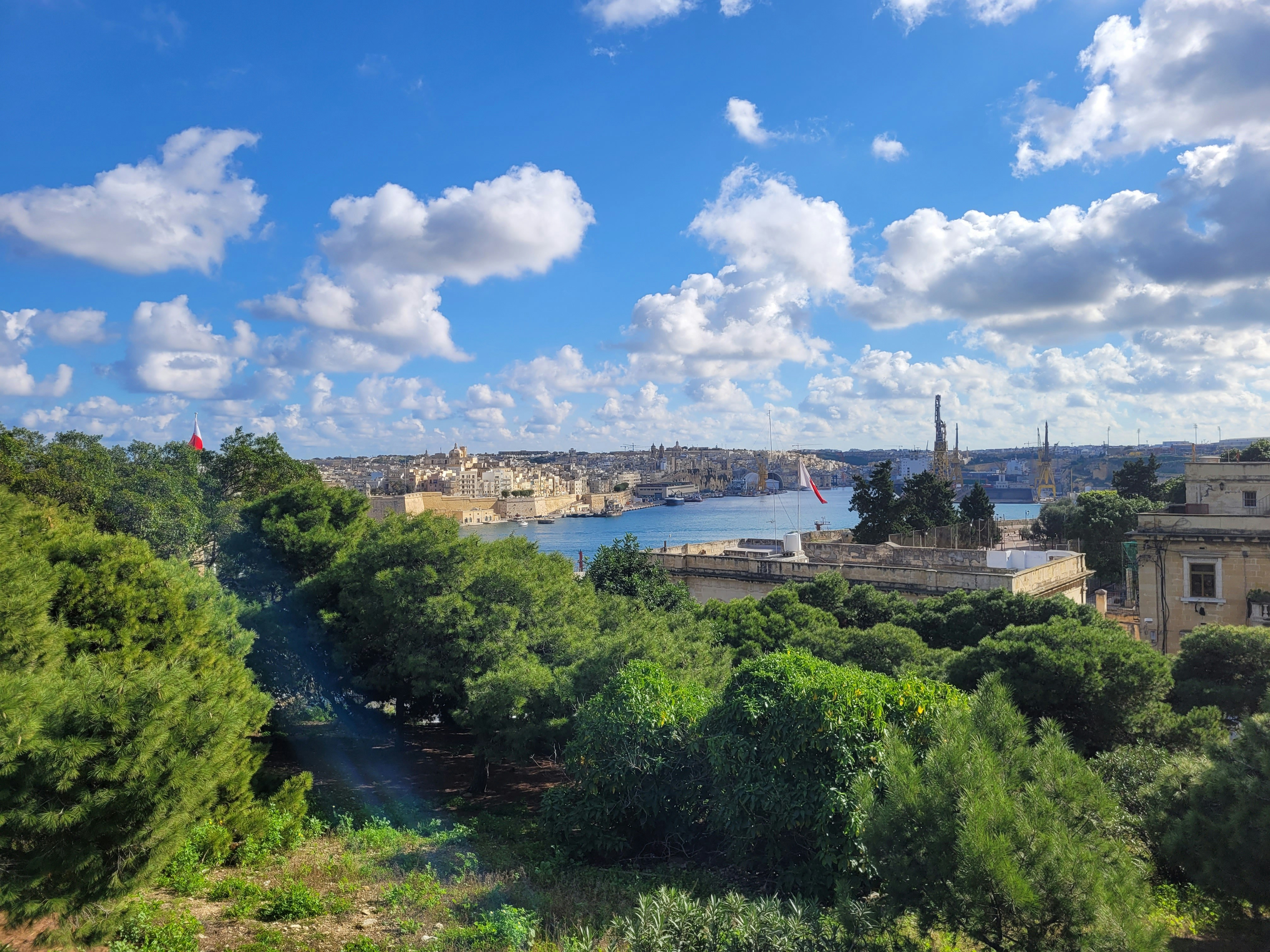
Valletta, Malta’s capital and a UNESCO World Heritage Site, is a vibrant city filled with history, culture, and stunning architecture. Residents can enjoy cobblestone streets, baroque buildings, and a lively waterfront, all within walking distance. Valletta is ideal for those who want a cosmopolitan lifestyle with easy access to museums, theaters, cafes, and fine dining, while still benefiting from Malta’s strategic location in the Mediterranean.
Sliema
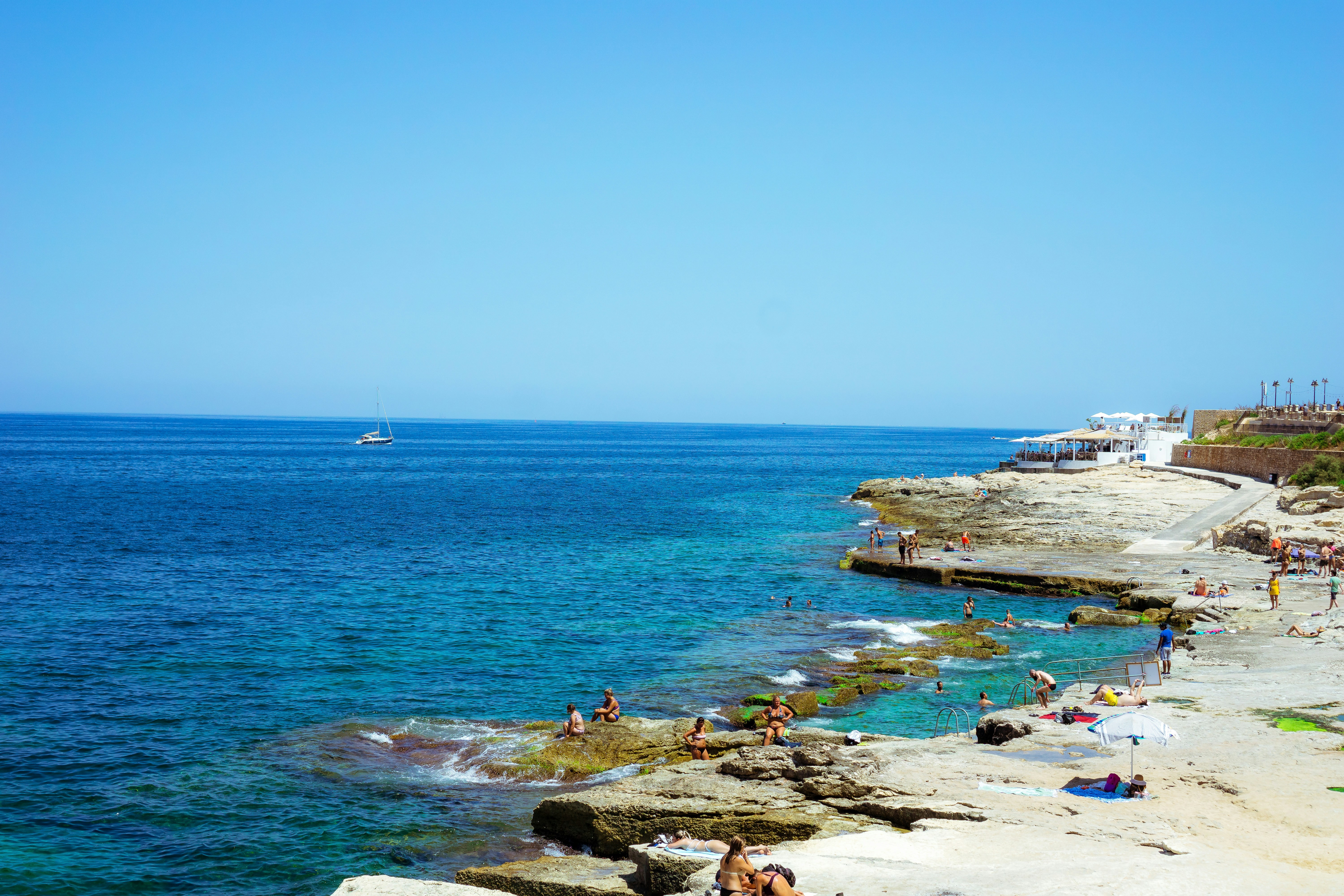
Sliema is a bustling seaside town known for its modern amenities, shopping districts, and beautiful promenade along the coast. It is a favorite among expatriates and international residents due to its excellent schools, restaurants, and social scene. With a mix of high-rise apartments and traditional Maltese houses, Sliema offers a balanced lifestyle that combines urban convenience with access to stunning beaches and a range of recreational activities.
Mdina
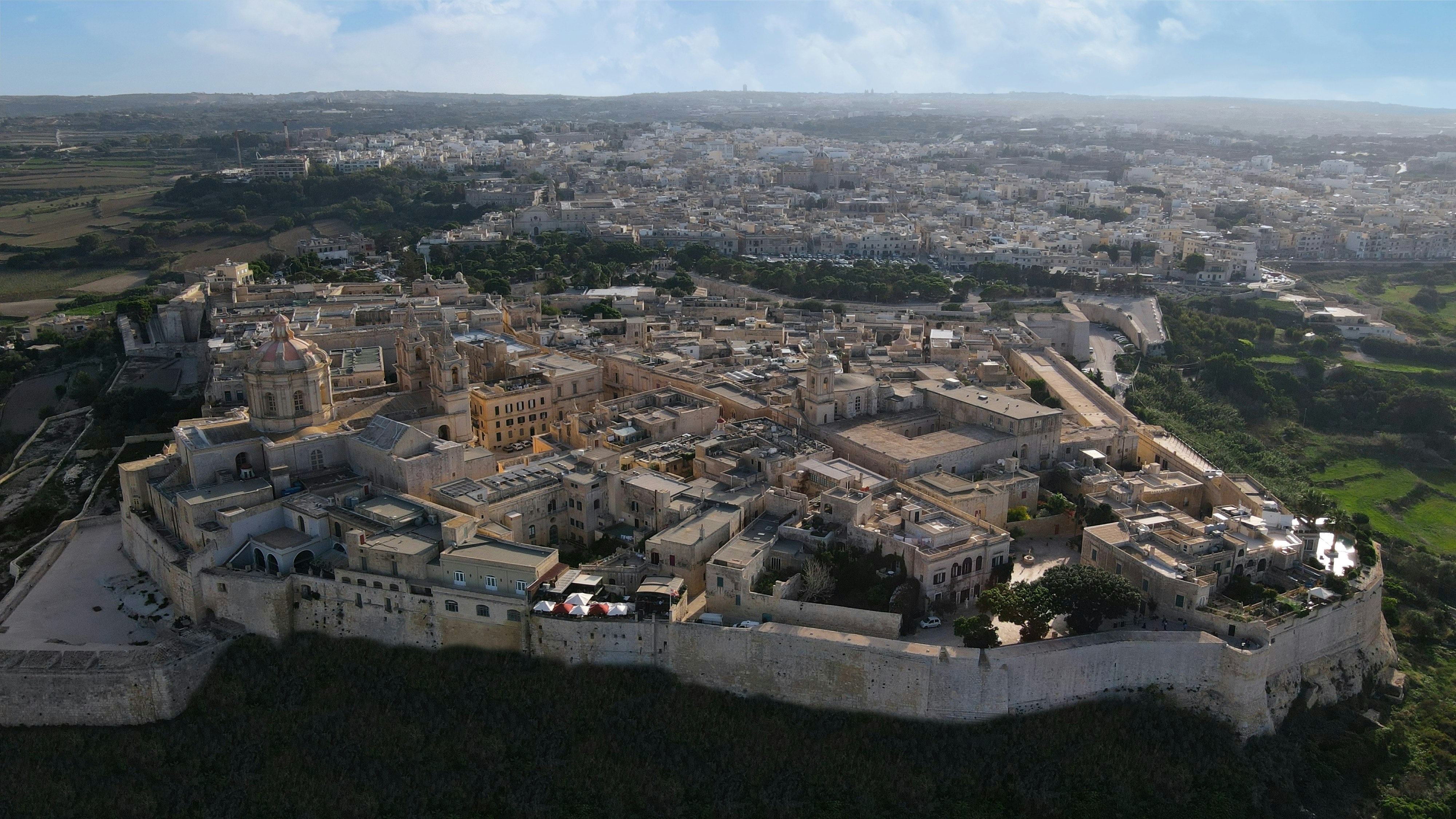
Mdina, often called the “Silent City,” offers a more tranquil and historic living experience. Perched on a hill in the center of the island, Mdina is famous for its medieval architecture, narrow streets, and peaceful atmosphere. It is perfect for those who appreciate a slower pace of life, scenic views, and cultural heritage, while still being within a short drive of Malta’s main cities and modern amenities.
Cost of Living
The official currency of Malta is the Euro (EUR). On average, €1 ≈ $1.08 USD based on annual exchange rate averages, though actual day‑to‑day trading rates can vary slightly.
The average net monthly salary in Malta is around €1,700–€1,800, which equates to approximately $1,840–$1,950 USD per month after tax for many workers.
Here’s a rundown of what you should expect to pay in different cities:
Valletta
Rent (1 bedroom in city center) – $1,067 per month
Rent (3 bedrooms outside city center) – $1,434 per month
Basic Utilities – $86 per month (electricity, water, etc.)
Wi‑Fi – $30 per month
Public Transport – $2 one‑way (bus ticket)
Groceries (2 people) – $500 – $700 per month, approximately
Sliema
Rent (1 bedroom in city center) – $1,078 per month
Rent (3 bedrooms outside city center) – $1,555 per month
Basic Utilities – $135 per month (essential utilities)
Wi‑Fi – $45 per month
Public Transport – $2 one‑way (bus fare)
Groceries (2 people) – $500 – $700 per month, approximately
Mdina
Rent (1 bedroom in city center) – $950 per month
Rent (3 bedrooms outside city center) – $1,200 per month
Basic Utilities – $80 per month (essential utilities)
Wi‑Fi – $45 per month
Public Transport – $2.50 one‑way (bus fare)
Groceries (2 people) – $300 – $450 per month, approximately
FAQs
What is the Malta Golden Visa and who is eligible?
The Malta Golden Visa, officially known as the Malta Permanent Residence Programme (MPRP), is a residency-by-investment program for non-EU, non-EEA, and non-Swiss nationals. Eligible applicants must meet financial, health, and background requirements, including a qualifying property investment, government contribution, and donation to a registered NGO.
Does the Malta Golden Visa lead to citizenship?
No, the Golden Visa grants permanent residence in Malta but does not automatically provide citizenship. However, it can form part of a longer-term pathway if applicants later meet the requirements for naturalization under Maltese law.
How long does the Malta Golden Visa application take?
Application processing typically takes several months, depending on case complexity and the speed of document submission. This includes background checks, due diligence, and verification of investment requirements.
Do I need to live in Malta to keep my Golden Visa?
No, the Malta Golden Visa does not require a minimum physical stay in the country. However, holders must maintain a genuine connection to Malta, including the qualifying property, health insurance, and other program obligations.
Can I include my family in my Malta Golden Visa application?
Yes, eligible dependents such as a spouse, children, and dependent parents can be included under one application, provided all family members meet the program’s due diligence and documentation requirements.
Author
)
Nadia Dardón is a content creator from Guatemala. She has worked fully remotely for the past six years as a copywriter, editor, and content creator, working for different industries. She started her digital nomad journey in 2022 and currently lives as an expat in Spain.


